Friday, April 30, 2010

jobs shares his stnace on flash


Steve Jobs posted an open letter on the official site, sharing his thoughts on Flash and explaining why he thinks Flash is not suited for mobile devices. Of course , HTML5 comes up in the letter. Basically everything breaks down to this points:

  • It’s not open ( no offense, but look who is talking… )
  • The “full web.”
  • Reliability, security and performance.
  • Battery life
  • Touch
  • The most important reason
Maybe this article makes much more sense now, but it is always better to hear it from the man himself. Read the letter here


[via FSM]

Thursday, April 29, 2010

wwdc10

WWDC10
Apple Worldwide Developers Conference
June 7-11San FranciscoMoscone West
Buy now $1,599

anyone have $1,599 they want to donate =/

iphone 4g camera rumors


Well, here's a nice bit of symmetry to emerge from the Apple rumor mill in recent days -- some new purported details on both the rear and front-facing camera on the next-generation iPhone. The first, and more straightforward of the two, comes courtesy of The Chosum Ilbo, which is reporting that the next iPhone will pack a 5-megapixel camera supplied by LG Innotek. Details on it are otherwise pretty light, but the site says that LG has already started producing the "sophisticated cameras" at its plant in Gumi this month, with mass production supposedly set to begin in the second half of this year. The second rumor concerns the iPhone's front-facing camera, and comes after a bit of digging in the latest iPhone 4 SDK beta. According to MacRumors, the SDK not only includes an unfortunate bit of code that suggests video calls will be WiFi-only, but evidence that video chat will be integrated into Apple's Game Center as well -- exactly how remains unclear, although there's certainly no shortage of possibilities. Dive into the links below for the complete details.

[via TiPb]

The Gizmodo iPhone Saga

Fast Company has posted a flowchart on the The Gizmodo iPhone Saga, which 'is a rough visual interpretation of the story'.


Every fact we discover about this whole lost iPhone story leads to another, and then there's one that refutes the first fact and then another that proves the first one true but negates the latter two, and so on. The legality of the case is in the murkiest of water, to the point where you can almost choose your own conclusion based on what's known--and not come out any less accurate than someone with the opposite conclusion. Hence, we present the entire saga, as it's currently known, in the style of a Choose Your Own Adventure book. If you're a pictures kind of person, follow the flowchart above, which is a rough visual interpretation of the story here.


[iClarified]

Wednesday, April 28, 2010

gizmodo may attempt to sue the police after iphone 4g raid

A lawyer hired by Gizmodo says his client may sue the police for conducting a raid of Jason Chen's home, saying that it qualifies as a newsroom protected by shield laws.

A report filed by Greg Sandoval of CNET cited Gizmodo's media lawyer Thomas Burke as saying that the search was "not the appropriate method in this situation."

Burke said the search could have been avoided if police had simply contacted the blog and asked for its cooperation in investigating the issues related to theft and the sale of stolen merchandise.

"If a request had been made," Burke said, "we would have freely and quickly given assurances under penalty of perjury that no information is destroyed. That's what would happen if a subpoena were followed, which is what happens ordinarily in these circumstances. That's why it's such a contravention of process. If that request had been made, none of this would have been an issue."

Wired reported earlier that Apple contacted the original individual holding the prototype and was rebuffed in its efforts to obtain the phone. Weeks after obtaining it, the individual then sold the device to Gizmodo, along with information about the identity of the engineer who had lost it. Gizmodo continued to hold the device while it prepared reports on it, the engineer and Apple's attempts to retrieve it, details that weaken the attorney's claim that Gizmodo was working to cooperate in the return of the stolen device.

In an earlier case where Apple attempted to subpoena bloggers to determine the source for leaked information they had printed, the company was blocked from obtaining a subpoena due to the shield laws for journalists. In that case, no criminal conduct was alleged.

Suing for sources vs. investigating criminal conduct

The Gizmodo case is different, because Apple is not pursuing a civil case against bloggers to obtain their sources. This investigation is a criminal case that revolves around the theft of a prototype and its sale to Gizmodo parent Gawker Media, a transaction that was publicly advertised by the blogger group.

While charges have not yet been filed, the police have said they have interviewed the person who obtained the prototype after it was lost and who kept it for weeks without returning it. There is also no real controversy around the fact that the phone was delivered to Gizmodo in exchange for a reported $5,000.

The fact that those circumstances are defined as a significant crime in California means that if Gizmodo is under investigation for buying stolen property, the shield law would not apply to offer any protection and Gizmodo would have no basis for suing the police in a civil suit.

Police considering shield laws in advance of investigation

On the other hand, if the police were only investigating the original individual who took the prototype and subsequently shopped it around to various media sources, including Engadged and Wired, before selling it to Gizmodo, then shield laws might apply because the police can't raid news gathering operations simply to determine the sources of their reports.

In that case, Gizmodo may also have a legitimate civil case against the police conducting the raid, although the law only allows for $1000 in statutory damages in addition to legal fees.

However, the police are clearly aware of the shield laws and did not obtain a warrant or conduct the raid without any knowledge of the rules protecting journalists.

Sandoval reported that San Mateo County prosecutors told CNET "they considered early on whether newsroom search laws applied--and decided to proceed only after carefully reviewing the rules." Chief deputy district attorney Stephen Wagstaffe noted that the prosecutor "considered this issue right off the bat" and "had some good reasons why he and the judge felt the warrant was properly issued."

The police are currently holding the seized property and waiting to conduct any investigation until the issue of whether shied laws are revenant in this case are resolved.

[iClarified]

iphone 4G to possible hit stores during the WWDC?


The next generation iPhone may be available for purchase during the World Wide Developers Conference (WWDC) instead of several weeks after, according to Mashable sources.

They report that the date could be June 7th; which is likely the date of the WWDC keynote.

Over the last two years, Apple has revealed both the iPhone 3G and the iPhone 3GS at WWDC. However, the release of the actual iPhone hardware has traditionally come a few weeks after the announcement. Our sources say that Apple may break that tradition this year by shortening the timetable. An immediate release would also break another tradition: Apple fans camping out in front of Apple stores just so they can get their hands on the company’s newest product.

Its been rumored that Apple is trying to push up the timetable due to the leak of an iPhone 4G prototype which might cannibalize sales in May and June. The loss of sales seems a bit unlikely. Those who follow tech blogs and learned about the leak also know that Apple has released a new hardware revision of the device each June/July since its inception.

Mashable notes that even if Apple wants to launch the new iPhone on the same day as the keynote it may not happen due to hardware issues, software bugs, and supply chain scarcity.

Read More

[via iclarfied]

Tuesday, April 27, 2010

"Geohot"(we think) tells us limera1n is a fake

limera1n

Yesterday, we told you about Limera1n, an upcoming jailbreaking/unlocking tool from Geohot. Although the domain name is registered with George’s credentials ( which were always public ) and the source code of the site contains gimmicks similar to Blackra1n ( site is saying ” WTF, is lime even a color?” and you can find lines in the tool like “drop it like it’s hot” ) , the tool might be fake. Geohot is saying that he is not working on a new tool at the moment.


To be honest, we tend to believe him, because updating the existing tool and changing the name would be stupid. But in the same time, he could just say this, so people will leave him alone, and he will drop the tool when the tool is ready…


Right now, we call it fake, and if anything comes up, we will keep you updated. Stay tuned…

Monday, April 26, 2010

ipad VS iphone


A few weeks ago, we showed you some tests conducted by Furbo shows that the iPad is twice as fast as the iPhone 3Gs when executing native Cocoa Touch apps. When compared to the original iPhone 2G, the iPad makes you say “Holy Crap!”. 100,000 iterations were performed 428x faster and 10,000 sin(x) calls were performed 8,750x faster on the iPad. Take a look at the charts below…


But exactly how fast is the iPad? Well, let’s check the vids…


limera1n

Limera1n

Apparently, GeoHot is working on a new tool, called Limera1n. There is no word on “the streets” about the tool, so we don’t know for sure what is this all about. It could be a new jailbreaking/unlocking tool for 3.1.3 , but we tend to think that it will run on OS 4.0 and it will include the iPad as well. RC1 of the tool might be released right after the iPad 3G launch, followed by RC2, RC3 which will include iPhone 4G ( just a presumption ). That’s all we know at the moment. Keep an eye on limera1n.com . We will keep you updated. Stay tuned…

lost iphone 4g dilbert comic


Scott Adams has posted two Dilbert comics about the lost iPhone 4G prototype which he has decided not to run. The reason being is that they wouldn't run in their normal position until June 18th 'which seemed too far in the future'.

Take a moment to marvel at the fact that I didn't need to add anything to the story as it has been told in the media. All it really needed was Wally. I don't think any of us will ever know what really happened. I based the comic on the media's speculation of events. Remember that I'm in the parody business and not the truth business.

Sunday, April 25, 2010

Thunderst0rm and TurboSn0w2 Jailbreaks Are Fake!

WARNING: Thunderst0rm and TurboSn0w2 Jailbreaks Are Fake!

TurboSn0w2 and the new Thunderst0rm jailbreaks for iPhone OS 3.1.3 are FAKE; DO NOT INSTALL.

BigBoss recently posted the following warning:

Thunderst0rm is “supposed” to be an untethered jailbreak for 3.1.3. It was released today and is available for download. Thunderst0rm is fake. Do not download or run it. We aren’t sure what all it does, but it does not jailbreak your device. Furthermore, it may install some spyware or something. It should be avoided. Rumors say it deletes several files from iTunes meaning you would possibly have to reinstall iTunes after running it.

Another one called TurboSn0w2 is also fake.
We will be sure to post as soon as a real jailbreak is released. You can also check your jailbreak status using the iClarified Jailbreak Wizard

[iClarified]

Saturday, April 24, 2010

does the iPhone 4's Audio and Video Chat Finally Break the Voice Calling Scam


A front-facing iPhone camera means video calling, but it's also a sign of something bigger. Combined with other recent leaks, it means that Apple is bringing iChat to the iPhone. Everything about voice calling may be about to change.

iChat, You Chat

So, how does the appearance of a front-facing camera change standard voice calling? Let's connect the dots:

• Front-facing camera means video calling
• Leaks suggest video calling is part of overall iChat
• iChat software and new VOIP provisions in OS means voice chat, too (maybe even for older iPhones)
• iChat branding, arrival of iPad and new OS multitasking all suggest compatibility with desktop app and standard buddy lists
• iPhone-to-desktop compatibility means everybody talks to everybody, no special plans needed

As I've said before, voice calling and SMS are both just part of the data stream, and don't deserve special treatment. Now, when there's a well-designed unified iChat client presenting an alternative to traditional calling and messaging, those old systems will become inconveniences. If Apple manages to do this right, and that's still a big if, they will finally provide a more human way to communicate: Pick a person, and reach out. The "how"—whether you use text, voice or video—should be of less importance than the "who."

Why Is Video Chat So Hard?

Make no mistake, this is about software, not hardware. There have been front-facing cameras on 3G-capable phones for ages, and many a carrier has attempted to market video streaming—for a price. But if you recall AT&T had real-time Video Share, but it was only one-way, only worked with AT&T, and even then, required special phones and plans. In Europe, where two-way video calling was tried more broadly, many have already written it off on phones as a disappointment and a flop. The hardware is here, the network, in many respects, is here, but the smart way to bring it all together and make it work—that's what's been missing.

It's easy to say why individual initiatives don't work: Even text messaging didn't take off when people couldn't send messages to people on other carriers. One-way video is creepy, violating the unspoken agreement that if you get to see me, I need to see you too. And of course, video chat on computers, via strong broadband connections, can still be awful, so how do you guarantee vid quality on a network that can't even guarantee that calls won't drop?

Carriers and handset makers have up till now blamed high prices and lack of marketing support, though one Nokia exec mentioned that the whole pointing-a-phone-at-your-head-and-talking thing was awkward, and not very "flattering."

Apple has to face all of these obstacles as it takes its turn at bat, even if it is a company known for succeeding where others have failed, especially where human-friendly software engineering and design are concerned. But my guess is that they're not in this for the cellphone-based video chat.

Video Chat Is Just The Gateway

On the Mac, video chat is just one dish on the iChat menu, a menu that also contains instant text messages and voice chatting. (There's even screen sharing and other frills that may end up on a phone or pad near you.) I contend that while video chat is a neat thing to do, at least once, the existence of a front-facing camera suggests this whole lineup of features.


If we can grab our phones, pull up the buddy list we see on our computers, and engage in a video call, then why wouldn't we also be able to do a quick text chat? And if we can do both of those things, what's to stop us from just doing voice calling? And if I can voice call all my buddies—be they on their computers, on their iPads or on their phones—from my phone using an iChat client, I may never make a regular real phone call again.

It may sound like a fantasy, but Apple has already laid the groundwork for third parties to make this stuff happen, so why shouldn't they put it in their own flagship mobile iChat app?

If Apple Doesn't Do It, Skype Will

During the iPhone OS 4 unveiling, Steve Jobs made room for a Skype demo showing how the VOIP service could work in the background, receiving calls while you did other things on your phone (or, ostensibly, your iPad). Not only does this tell me that Skype is busy devising dramatic uses for iPhones that will completely workaround AT&T's voice calling, it also tells me that Apple condones it to the point of promoting it early and often. And speaking of AT&T, the carrier already allows VOIP over 3G. While that can currently be found in primitive form through Skype using Fring, it it really means that a new Skype iPhone client will not only run in the background of your iPhone, but will run regardless of what network you're on.

We're already excited about this, so what about that camera? Will Apple give Skype access to the camera? My sense is that it will either be tied exclusively to a very powerful iChat client, or it will be offered freely to developers. Apple wouldn't go to all the trouble to put a second camera in if they didn't think the thing would get mileage.

Let's face it, iChat may not be the perfect multi-protocol messaging app for the Mac, so there's a good chance it won't do amazing things for the iPhone. But if there's a healthy coop-etition between Apple's own development and the best developers in the desktop space—not just Skype and Fring but Adium and Cerulean and Meebo—then who's to say that soon, there won't be a handful of good options? You've heard me say that voice messaging and SMS charges are a scam—a great iChat client for the iPhone would soon render them a sham, too.

Friday, April 23, 2010

police opening investigation into LOST/stolen Iphone 4g


Silicon Valley police have opened an investigation into how Gizmodo came into possession of the iPhone 4G prototype, a law enforcement official told CNET on Friday.

Apple has spoken to local police about the incident and the investigation is believed to be headed by a computer crime task force led by the Santa Clara County district attorney's office, the source said.

The purpose of an investigation is to determine whether sufficient evidence exists to file criminal charges.
Gizmodo, part of Gawker Media, paid $5,000 for what they believed to be an Apple iPhone 4G prototype. The iPhone was reportedly lost by an Apple employee then found by someone who contacted the site.

There has been much discussion online as to whether the finder/seller or Gizmodo violated any laws by taking possession of the device. CNET has not been able to confirm whether the investigation is targeting Gizmodo.com, the seller, or both.

The computer crime task force is called REACT, which stands for Rapid Enforcement Allied Computer Team, and was established in 1997 with a goal of working closely with Bay Area technology companies.

Lufthansa offers free flight to the person who lost hte iphone 4g


We’re still uncomfortable that Gray P., the hapless Apple engineer who lost his iPhone 4 prototype should have been named online.

That feels a little like rough justice to us.


But he may as well take up the offer from a European airline, which is offering him a free business class trip to Germany - and all the beer he can drink.


In a move German airline, Lufthansa, claims is completely altruistic, the head of that company's marketing team's written to Powell to offer him free business class flights to Germany to sample its Bavarian Beer Garden Business Lounge. (He left his iPhone prototype in a German bar).


The invitation, shared by Lufthansa’s marketing director for the Americas, Nicola Lange, on Twitter, reads:


“I recently read in the news that you lost a very special phone at a German beer bar in California.
“We all know how frustrating it can be to lose personal belongings, especially when it is such a unique item.

At Lufthansa we also noted with great interest your passion for German beer and culture. We thought you could use a break soon - and therefore would like to offer you complimentary business class transportation to Munich, where you can literally pick up where you last left off.”


What would you do?

Thursday, April 22, 2010

Women found to be more likely to give their number to a man with an iphone


A new survey has found that women are more likely to give out their phone number to men who have iPhones.

CultofMac reports that a Phones4U survey of 1,500 women found that 54% of them would be more likely to give their digits and date an iPhone owner than a non-iPhone owner and 37% said that owning an iPhone makes a man seem more reliable.

The survey also found that iPhone owners were better groomed, more likely to have a good sense of humor, and better at conversation.

“There’s just something about a man who’s good with computers that makes him more trustworthy,” said Lucy, a 23-year-old primary school teacher from London, in the press release. “If he’s got the cash for an iPhone then he must be very good at his job, too.”


[iClarified]

IF YOU ARE A MAN...GET YOUR IPHONE NOW! lol

iphone 4G what we know and have no clue of

The iPhone 4G? iPhone 4? iPhone HD? Simply "iPhone"? There's plenty we still don't know about Apple's upcoming handset, like the name for instance, but thanks to an unprecedented leak and a whole bunch of peripheral rumors, we've got just about the most info you could hope for going into a major Apple launch. Follow along after the break as we parse through what we know, what we've heard, and what we hope for in the next iPhone.

Industrial design

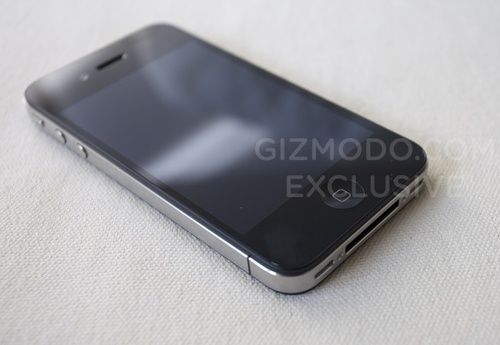
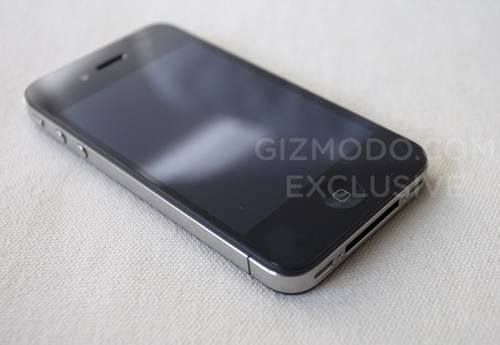
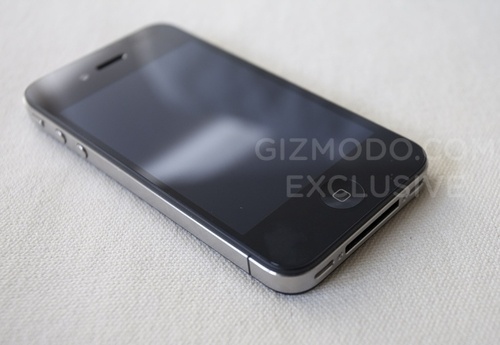
From all accounts, we're looking at it. The prototype Gizmodo obtained and which we scored photos of -- including a shot of one sitting near a locked down iPad -- is clearly Apple's, and according to John Gruber's sources, the "DVT" in its barcode means the phone is very late in its design cycle, and might even be exactly what we'll be seeing hit the shelves.


The phone sports an oh-so-familiar glass front, but instead of the rounded bezel there's a flat metal band running around the sides creating an ice cream sandwich of sorts. From the side the design is actually a lot like Nokia's N78, with some hints of Sony Ericsson C510 and T610 (one of the most famous examples of this sandwich aesthetic). Around back is the design's most interesting innovation, a flat, glass-like back. Apple has a 2006 patent for a "ceramic" enclosure that's highly durable, scratch-resistant and radio transparent, and the popular thinking is that this is being used here.

One very interesting aspect of the design are the very un-Apple-like vertical notches in the design, one on each edge. Some have thought that this might point to the non-final nature of the handset, but others are speculating based on the build of the device internally that two of the notches actually allow for side access to the battery, while the other two notches are there for aesthetic symmetry. With the MicroSIM card holder located on the side of the phone now, the paper clip-friendly hole on top would make for a convenient way to unlock the side. Meanwhile, Gizmodo has speculated that this hole could be for a noise canceling mic, another possibility, and their discovery of an "Authorized Service Provider Only" tab under the battery would seem to imply that it isn't user accessible.

The final tweak to the look and feel of the device are the all-metal side buttons. The mute switch, lock button, and volume buttons (now two separate circles instead of a rocker) are all silver colored now and made of metal. One potential for the newly separated volume buttons are as dedicated camera controls when the camera app is open, but that's just pure speculation.


Screen

While the looks are the first thing that strikes you, Apple's general design direction for the iPhone, iPod touch, and iPad has been a de-emphasis of form in an attempt to highlight and center the screen in the user's consciousness. The actual device should disappear. So, day to day, the biggest news for users might be the higher resolution screen that Apple is apparently using here. Gizmodo wasn't able to count the pixels, but also: they weren't able to count the pixels. The density is obviously very high. The screen is apparently slightly smaller, or maybe just narrower than the current iPhones, possibly lending credence to those leaked screens we've seen.

The most popular rumor about pixel density is John Gruber's report of 960 x 320, an exact doubling of the resolution in each direction (quadrupling the pixel count). The benefit to developers would be obvious: instead of reworking every pixel of their apps, they'd just look exactly the same to the user, with each pixel represented by four pixels, until they can rework the app for the new screen with some eventual SDK release. With 800 x 480 screens becoming popular over in Android land, it seems obvious that Apple needs to do something to stay competitive resolution-wise, and the boost in pixel density (330 ppi, the Kindle offers 167 ppi by contrast, and the current iPhone packs a mere 162 ppi) would be a real boon to folks who use the devices for heavy reading.

Cameras

The other huge improvement and change in the new iPhone is the addition of a front-facing camera, which is a near guarantee that Apple will be bringing a version of video chatting (and hopefully the whole multi-protocol, IM-tastic iChat AV suite) to the phone with iPhone OS 4. There's already plenty of evidence of this within the recently released SDK, but given Apple's sometimes random-seeming camera axing (the iPad and recent iPod touch were both rumored to have some sort of camera), we're not going to believe this 100 percent until we're doing a video chat with grandma. Either way, the front-facing camera does seem a lock.

Around back is more good news: the camera lens seems to be larger, which would theoretically point to an improved camera, a sort of no-brainer for phone updates in this day and age, though it's hard to see Apple shooting up all the way to the 8 megapixel sensors we're starting to see from the competition. Next to it is an LED flash, which will help for those dastardly low light situations that the iPhone so struggles with.

Internals

This is probably the biggest mystery so far. Gizmodo did a teardown of the phone, but since they didn't want to damage the insides, we weren't able to learn too much. The biggest question mark is if the phone is getting a version of the iPad's speedy, power-sipping A4 processor. Our guess would be yes, but there's nothing solid that's been unearthed so far to actually verify that assumption.

Storage is also a mystery, since the back of the prototype says "XX GB." Very unhelpful, but a bump seems a natural. We heard 80GB from our source, a number that's been bandied about unsuccessfully since 2007. Since flash storage is typically sized in powers of 2 (16GB, 32GB, 64GB, 128GB, etc.), it's an odd number, but it would make sense if Apple has somehow managed to find room for two flash chips and decided to pair 16GB and 64GB modules -- which would be much cheaper than a single 128GB chip. Typically Apple only has room for one flash chip in its iPhones, while the iPod touch can make room for two, but with all the internal rejiggering that's going on it's not out of the question.

One thing that's very obvious from multiple teardowns is that the battery is larger. Gizmodo pegs it at 16 percent larger, at 5.25 WHr instead of the 3GS's 4.51 WHr. Given that external battery packs are one of the iPhone's hottest accessory, it's obvious that people want more battery life, and hopefully a larger batter up against that higher resolution screen and faster processor can still win out in the end and improve usage time -- it's certainly done wonders for the iPad.

Like we mentioned before, the phone uses a MicroSIM slot now, instead of one of those old and busted SIM cards. What's the difference? Check out our handy guide and bask in the mind-expanding knowledge it provides. One thing it certainly doesn't imply is a move to 4G, since the iPad uses the same MicroSIM tech and it's a 3G device.

So, about that 4G. It seems incredibly unlikely at this point, but you can't really rule anything out, either. John Gruber points out that the "N90" in the prototype's barcode points to a "fourth-generation GSM iPhone," possibly differentiating it from some non-GSM version, though that's certainly a slim bit of evidence. Since AT&T's LTE network isn't as far along as Verizon's, if Apple were to build an LTE iPhone it would most likely pair a CDMA chipset for voice with an LTE chip for data (similar to the EVO 4G's approach to WiMAX) and bring it to Verizon, but apparently if such a handset exists, this prototype isn't it.

A regular 3G Verizon version of the phone also isn't strictly ruled out, there's just no hard evidence for it either. With LTE so near (Verizon plans to do data by the end of the year, with its first phones out in the first half of 2011) it seems silly for Apple to build a CDMA-only phone right now, particularly with how staunchly they've resisted moving to Verizon so far, but anything's possible.

Software


Despite the fact that the prototype wasn't actually running by the time Gizmodo got its hands on it, we actually know the most about the software the next iPhone will be running, thanks to a handy little iPhone OS 4 event Apple put on the other week. We won't rehash everything (check out our hands-on and feature breakdown for the full skinny), but the highlights should be enough to start the saliva: multitasking (sort of), enhanced mail (threaded messaging), Game Center (it's like Xbox Live), iBooks, App folders, and the all-important addition of Bluetooth keyboard support. If you're an optimistic type, you can add iChat on top of all that.

Of course, the iPhone 3G and 3GS will be getting most of these features (though the mega-addition of multitasking is being left out of the 3G), but it's clear that Apple is creating a "gradient" of sorts that slowly kicks out the old phones (the original iPhone and original iPod touch are being left out of the update entirely, for instance). We're guessing the 4th gen iPhone will lay claim to a few exclusive features, and as the software continues to progress it will fare better in feature exclusivity than its older siblings -- until the 5th gen comes along to usurp it, of course.

Release

In a sense this is a very predictable bit of all this: Apple's released three iPhones so far, two in June (the 2G and the 3GS), one in July (the 3G). We'd say that maps a bit of a trend, and we haven't heard anyone pin a launch outside of those two months. Our most recent rumor on this front is from Canada's SaskTel, whose CEO claimed a new iPhone was coming out in "the June time-frame." The statement was later "clarified" to be referring to openly reported rumors, not any sort of inside knowledge, but since June is before July, we're going to choose to believe it until shown otherwise.

In case you need a bit of added proof that this phone is right around the bend, Apple plans on shipping iPhone OS 4 "this summer," and the last time we got a big update (iPhone OS 3.0) it shipped two days before a new phone, the 3GS.

Wrap-up

So, plenty of facts remain to be uncovered, and we're sure Apple's eventual official unveiling of the next iPhone will be action-packed in its own way, but at least one thing's clear: there's almost no reason to buy a current-gen iPhone right now. Even if the 3GS is good enough for you, Apple might do a repeat of the existing retail configuration and bop that phone down to $99, the spot the 3G currently occupies.

And that brings us back to the name: if the phone isn't actually 4G it would seem silly to call it "4G," since "3G" meant a 3G network, not third generation. iPhone HD makes a lot of sense, given the upped screen resolution, but it's also a completely overused moniker on the market currently (even Apple uses "HD" to differentiate its iPad and non-iPad apps. One other possibility is just calling it "iPhone," and leaving it to us to figure out the generation based on specs (much with the old iPods, or Apple's Macintosh lines), but now we're just speculating.

Gizmodo indicates that the found iphone 4g was nearly a finalized design.


Barcodes attached to the iPhone 4G prototype revealed by Gizmodo indicate that it was nearly a finalized design.

Daring Fireball's John Gruber has learned that starting a few weeks ago a number of iPhone engineers were allowed to begin using pre-production units outside of the Apple campus. These units were disguised as the iPhone 3G/3GS, were not allowed to be demonstrated to anyone, and were tagged with barcodes to distinguish the unit.

According to Gizmodo, one of the barcodes attached to the unit read “N90_DVT_GE4X_0493”. According to several sources familiar with the project, “N90” is Apple’s codename for the fourth-generation GSM iPhone, slated for release this June or July. “DVT” stands for “design verification test”, an Apple production milestone. The DVT milestone is very late in the game; based on this, I now believe that this unit very closely, if not exactly, resembles what Apple plans to release.

Gruber continues on to discuss the legal and ethical issues that Gizmodo faces by having published this story.


[iClarified]

mili charging iphone skin... awesome if you ask me


I wasn’t all that impressed with the design of the MiLi power pack — it was good looking, but it wasn’t anything that Mophie hadn’t done yet. This MiLi Power Skin, on the other hand, is a real looker that’s just a hair slimmer than Mophie’s Juice Pack Air, while still maintaining the 1200mAh battery. There isn’t an on/off switch like on the JPA, but you can tell the device exactly when to charge your iPhone by pressing the power button. As a bonus, the Power Skin uses the now-ubiquitous mini-USB port, so you can have your pick of cables, should you lose the one that comes with this charger.
One of the best places to get this case still seems to be the aptly named Powerskin.co.uk, where you can purchase one for about 75 USD.

Iphone Dual boot with android OS


Planetbeing has been working on this quietly in the background, and today he posted a new video showing that iPhone can actually dual-boot and also, that is running Android.

Pre-built images and sources at http://www.mediafire.com/?xqjzn12igfn. Read the README. For generic openiboot instructions, there’s plenty now that you can search for.


It should be pretty simple to port forward to the iPhone 3G. The 3Gs will take more work. Hopefully with all this groundwork laid out, we can make Android a real alternative or supplement for iPhone users. Maybe we can finally get Flash.


If you like to help the project join the team on IRC, #iphonelinux on irc.osx86.hu …


[via FSM]

iphone OS 4.0 beta 2 video.


Yesterday, we told you that Apple pushed iPhone OS 4.0 beta 2. We had plenty of time to play with it and well… it’s a bust. Tons of bugs and some visual tweaks. As you can see in the vid above, we got a new multitasking transition, improved slider graphics and new way to choose a wallpaper background. Another thing that we missed to record, is that now, all your email account will get the provider icon ( gmail, yahoo etc… ) That’s pretty much about it.
There are a lot of bugs tho…

  • First of all it is the camera does not work at all. You can take pictures but they won’t be saved into the photo library.
  • You can’t take screenshots. Pressing Home+Power button, the shutter will lock and the screenshot won’t be saved into the photo library
  • Sometimes when you choose the wallpaper it would just hang and you will have to hard reset the device.
Just a few serious bugs. Bottom line, if you are not a developer, do not update to iPhone OS 4.0 beta 2…


[via FSM]

Wednesday, April 21, 2010

Gizmodo disects next gen iphone

The Next iPhone, Dissected

The Next iPhone, DissectedWe took apart the next iPhone.
There are a number of interesting facts gained from the dissection, the most important of which is more concrete confirmation (as if we needed any more) that this phone is from Apple. There are three separate places, inside the case, where APPLE is written prominently.
Upon unscrewing the bottom two screws—just like with the 3GS—you can use a suction cup and pry off the back portion of the phone, not the front like on iFixit's 3GS teardown. Once open, you'll notice that the battery takes up around 50% of the phone, give or take. Very impressive.
The Next iPhone, DissectedDiving deeper becomes much trickier. There are a total of around 40-50 screws inside the phone, positioned at various angles that are almost frustratingly impossible to get to. Components can be removed and detached from other components. There are a handful of pieces like this. But you don't know which ones are meant to detach, because you don't have the manual. Once you get all the screws off and pry off the pieces that connect the micro-SIM, the camera, the on/off switch and volume buttons, you're ready to access the brains.
The Next iPhone, DissectedThe main logic board is one very weird piece of this puzzle. Unlike the iPhone 3GS teardown, which revealed a large logic board along with another part down by the dock connector, this design only has something maybe 1/3 of the size, along with one or two extraneous parts. Basically, the guts have shrunk drastically.
The Next iPhone, DissectedUnfortunately for us, Apple intends to keep this a secret. There are no markings on the board, but even so, the board was encased in metal all around so nothing could get through and would be very difficult to remove without breaking the device. Anyone trying to take this part off the phone would damage the device irreparably. On top of this metal, there was a thermal paste-like material. And on top of that, black tape. They really didn't want people looking inside.
I wanted to make sure I didn't damage the components beyond repair, so I didn't take the metal off. So this is as much as I could learn without actually breaking the phone. And this is why I couldn't find out if there was an A4 processor—like the iPad's—in this iPhone. I also couldn't really identify many parts, because they were hidden under the metal sheath.
Once the guts are out, all you have left is the screen. The back of the screen (on the inside) is a shiny mirror, and if you're not careful when taking it apart, you can scratch the face of the phone from the back, like a CD.
If it wasn't obvious by the micro-SIM card, this particular phone most likely wasn't for Verizon. That's not to say that there isn't a Verizon phone in the works, but I'm pretty sure what I held in my hand was not it.
No, the battery is not user-removable. You have to open the case to get at it.
The Next iPhone, DissectedTwo lessons can be learned from the hours and hours it took to disassemble the phone. First is that everything fits in here like an intricately-designed jigsaw puzzle. This is definitely laid out like a final product. To think that there's more room left for any components for this case is unreasonable. Unless Apple decides now to go with a larger case so they can fit more things in there, this is the most that we're going to see this summer. Apple put all these components in here to test, to make sure that they're available for use if necessary. It's also possible that Apple will take out components at the last minute, be it due to a contract issue, or a manufacturing problem, or a cost comparison.
Second, Apple really, really shrunk down their parts to make this phone thinner. It might weigh 3 grams more than the 3GS, but remember, the battery is 19% larger than before. Everything else is way reduced to fit the smaller case.
After subsequently putting the phone back together, I really feel sorry for the factory workers in China who do this all day.